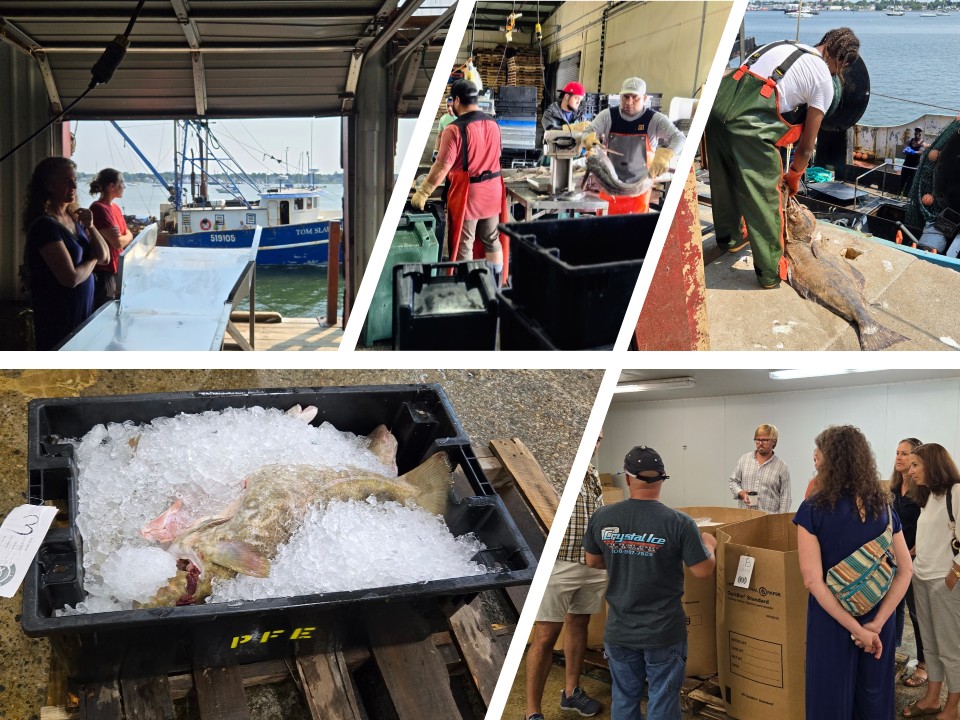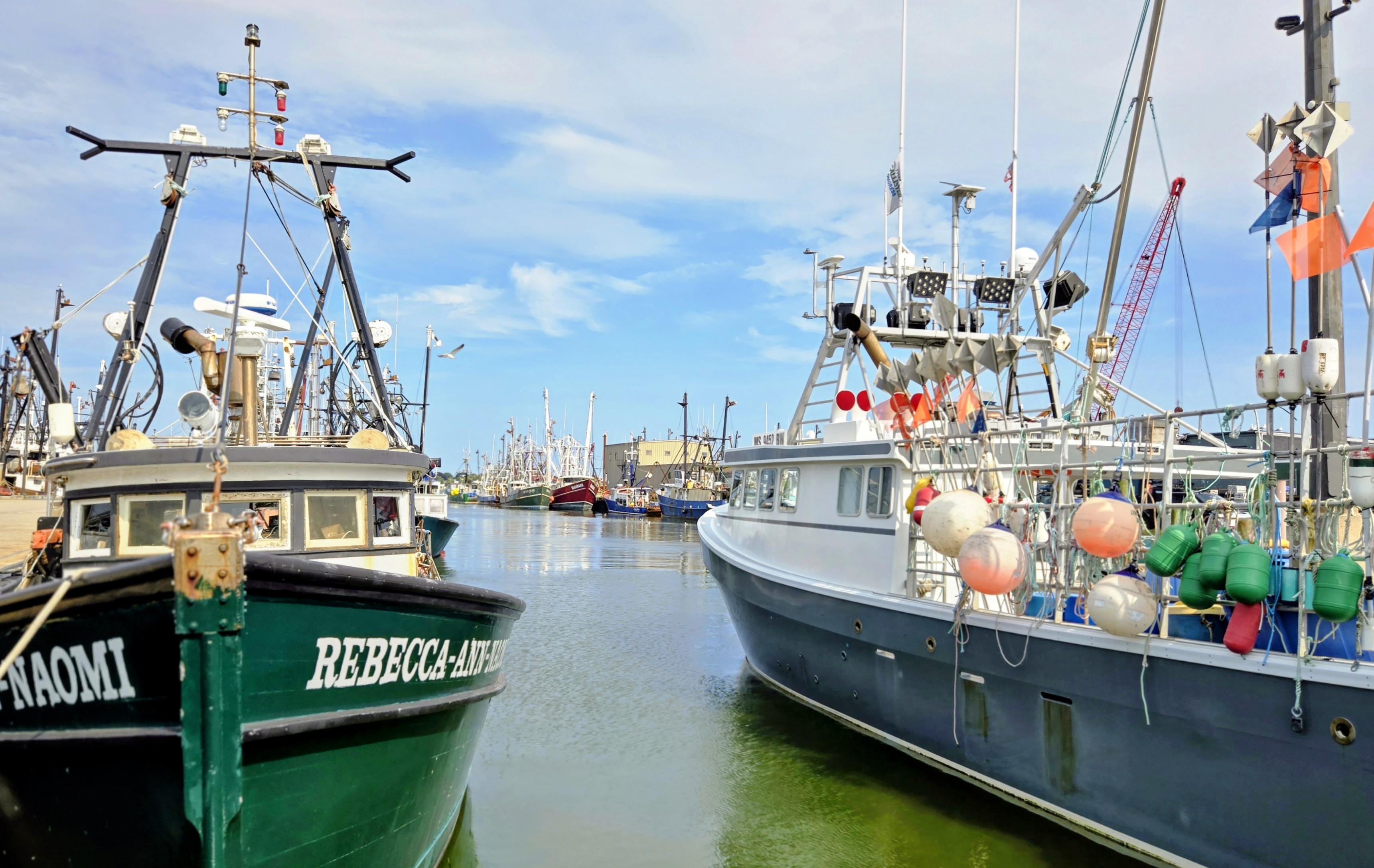
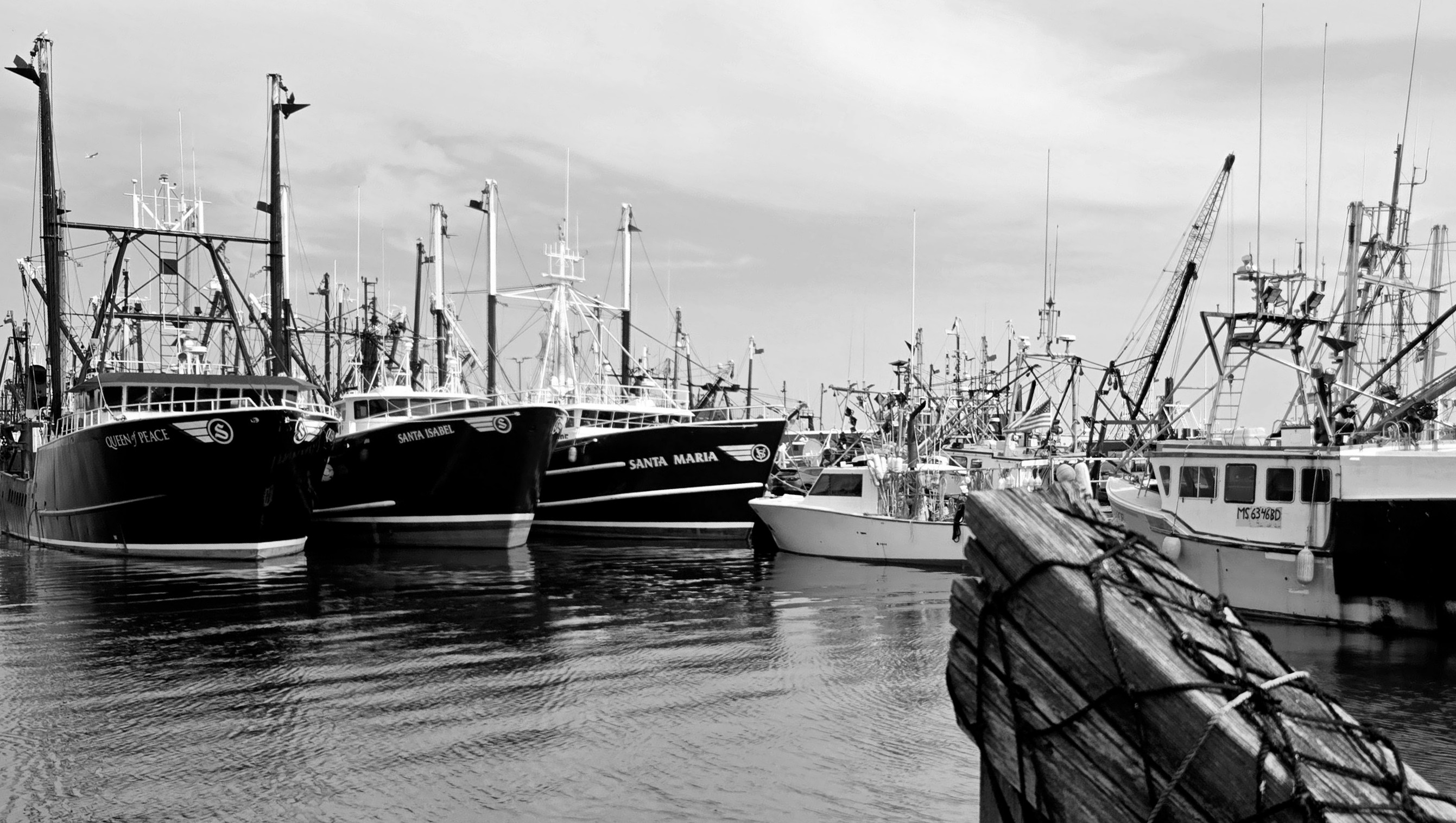
Dr. Anna Birkenbach and other members of the New England Fishery Management Council (NEFMC)’s Scientific and Statistical Committee (SSC) traveled to the working waterfront town of New Bedford, Massachusetts for their latest meeting. Once one of the world’s top whaling ports (visit the excellent whaling museum!), New Bedford has weathered stock declines, fishing fleet and port consolidation, and the global seafood trade to remain a top landing location for groundfish, sea scallops, and more.
It’s also home to the largest seafood auction on the U.S. East Coast. SSC members got a tour of the BASE Seafood Auction (Buyers & Sellers Exchange) from plant manager Lenny Pimentel, who answered the group’s many questions about auction logistics and shared the magnificent waterfront view. SSC members examined scallops in boxes from that morning’s auction, along with one stray cod (both pictured below). The Canastra family, which runs the auction, now owns several vessels formerly belonging to “Codfather” Carlos Rafael, whom Dr. Birkenbach met the last time she visited the auction, just before his imprisonment.
Those who accepted the smells, crustacean parts, and splatter of fish juices on their now-condemned footwear were in for a special treat: a vessel arrived to offload groundfish, including an Atlantic halibut (pictured below), haddock, and American plaice. Hungry seals, cameras, a dockside monitor, and SSC members all watched as catch was heaped in a bucket by hand and transported by rope, load by load, from the vessel hold below deck to the auction’s cleaning and sorting station. Once categorized, the fish were placed on ice to be sold the next morning.
Nowadays, most buyers participate in the auction online, watching prices tick up or down on computer screens rather than on a chalkboard in a packed room. Much of the seafood that passes through the auction is destined for New York City, where it helps secure the city’s reputation for malodorous ground juices…and, some say, cuisine.